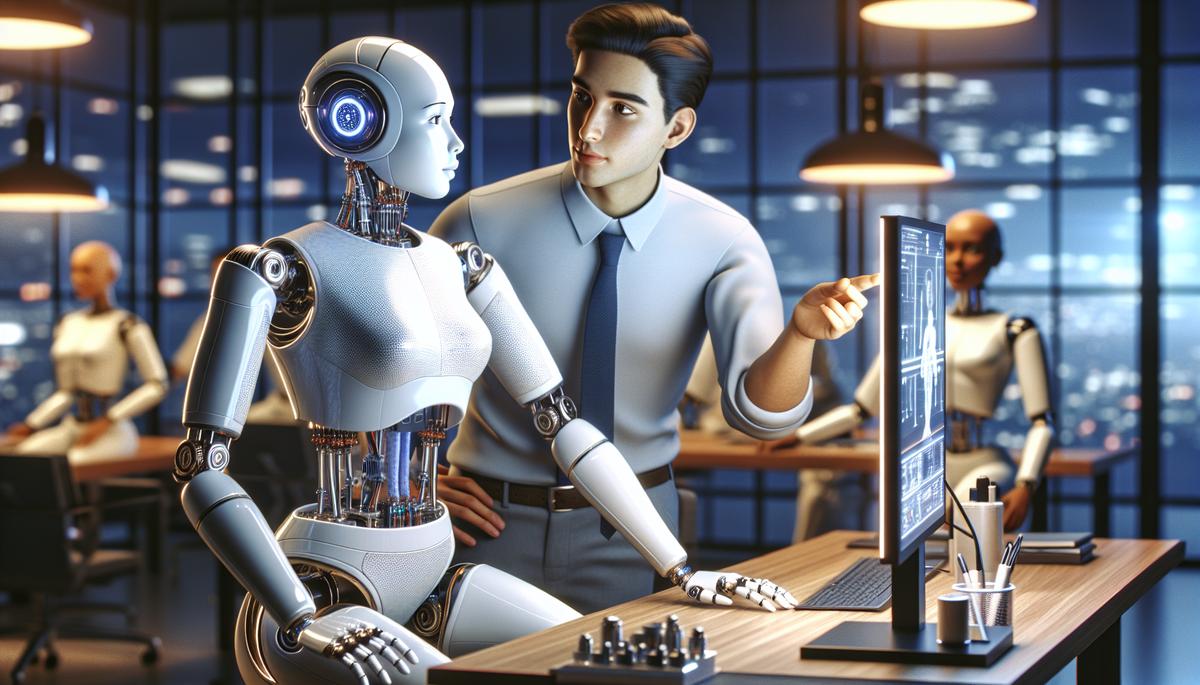
Gig Workers Training Humanoid Robots from Home
Introduction
In a rapidly evolving technological landscape, the rise of artificial intelligence and humanoid robots is transforming our work environments. Among the key players in this revolution are gig workers who, from the comfort of their homes, contribute to training these machines. This article delves into this innovative dynamic and its implications for the job market.
The Role of Gig Workers
Consider the case of Zeus, a medical student living in a picturesque town in Nigeria. After a long day at the hospital, he dedicates himself to a surprising task: training a humanoid robot. With a simple setup consisting of a ring light and a smartphone, he captures human movements and interactions, making them accessible to these machines.
This phenomenon is not limited to Zeus. Many freelancers worldwide engage in this type of work, leveraging their expertise and creativity to feed robots' learning algorithms. This trend underscores the growing importance of human skills in a technological environment.
Impact on the Job Market
The increasing use of gig workers to train humanoid robots raises several questions. On one hand, it creates new professional opportunities. Workers can diversify their income by getting involved in innovative tech projects. On the other hand, this evolution may also raise concerns about the sustainability of certain jobs in the face of automation.
It is essential to recognize that while robots can perform repetitive tasks and analyze data, human skills such as empathy, creativity, and complex decision-making remain irreplaceable. Gig workers inject a vital human touch into the machines' learning process, making them key players in the innovation landscape.
Challenges Ahead
However, this dynamic is not without challenges. Gig workers often have to navigate an uncertain labor market where pay and working conditions can fluctuate. Additionally, access to the necessary technologies to participate in these projects is not always equitable, creating disparities based on region and income levels.
It is crucial that measures are put in place to ensure fair and equitable working conditions for these new contributors to the digital economy. Companies and governments need to collaborate to create a framework that supports workers while fostering innovation.
Conclusion
The involvement of gig workers in training humanoid robots is a fascinating illustration of how technology and the labor economy are evolving together. It offers new perspectives for both individuals and businesses, while presenting challenges that require careful consideration.
For those interested in exploring this topic further or looking to engage in the field of artificial intelligence and technology, I invite you to Contact me. I would be delighted to discuss opportunities and strategies for navigating this ever-changing environment.