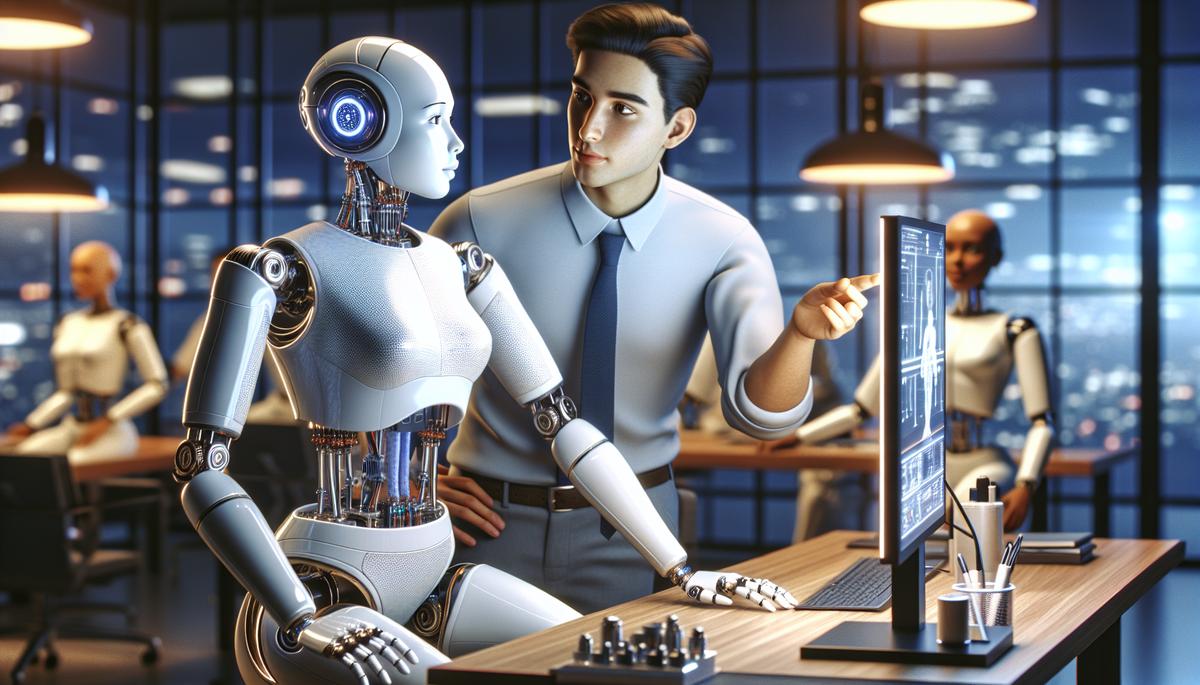
The Impact of Artificial Intelligence on Professional Activities
Introduction
Artificial Intelligence (AI) is transforming the professional landscape in unprecedented ways. According to a recent study by OpenAI, the use of ChatGPT and other AI-based tools allows workers to take on diverse tasks, thereby altering traditional role boundaries. As an expert in marketing and real estate, I am particularly attuned to these developments that redefine work dynamics.
Redefining Professional Roles
One of the main findings of the study is that ChatGPT users, for instance, are undertaking tasks that go well beyond their initial job descriptions. This means that workers no longer confine themselves to their classic roles but explore new skills and responsibilities. This trend presents unprecedented opportunities for learning and professional development. In the real estate sector, for example, agents can utilize AI tools to analyze market data, write property descriptions, or interact with clients in a more personalized manner.
Skill Augmentation
Rather than replacing workers, AI acts as a skill amplifier. Employees are encouraged to develop digital skills, understand basic algorithms, and work in harmony with intelligent systems. This not only fosters efficiency but also enhances job satisfaction, as employees feel better equipped to tackle complex challenges. In marketing, data analysis and content creation are now more accessible thanks to AI tools, enabling professionals to focus on more creative strategies.
Evolving Job Boundaries
With the rise of AI, the boundaries between different professional roles are becoming blurred. For example, a marketing specialist may also take on customer service responsibilities through AI-powered chatbots, while a real estate agent might engage in digital marketing. This hybridization of skills benefits companies by promoting greater flexibility and improved interdisciplinary collaboration.
Challenges to Address
However, this transformation does not come without challenges. The need for continuous training is paramount to ensure that workers remain competitive. Companies must invest in skill development for their employees to prevent a gap between those who adapt to AI and those who fall behind. Furthermore, it is crucial to ensure that the adoption of AI is ethical and responsible, safeguarding user data and preventing bias in technologies.
A Vision for the Future
The future of work will undoubtedly be shaped by the integration of AI into professional environments. Companies that embrace this evolution will have a significant competitive advantage. For professionals, this represents an opportunity to broaden their horizons and explore innovative career paths. As a real estate marketing expert, I already see changes in how transactions are conducted and how clients interact with real estate services, thanks to AI.
Conclusion
Artificial intelligence is redefining the world of work by expanding roles and augmenting workers' skills. To leverage these changes, it is essential to stay informed and adapt to this new reality. I encourage you to think about how you can integrate these tools into your own work to maximize your potential.
For any questions or to discuss the impact of AI on your sector, Contact me.